When You Can't Pull the Card, You Become the Card
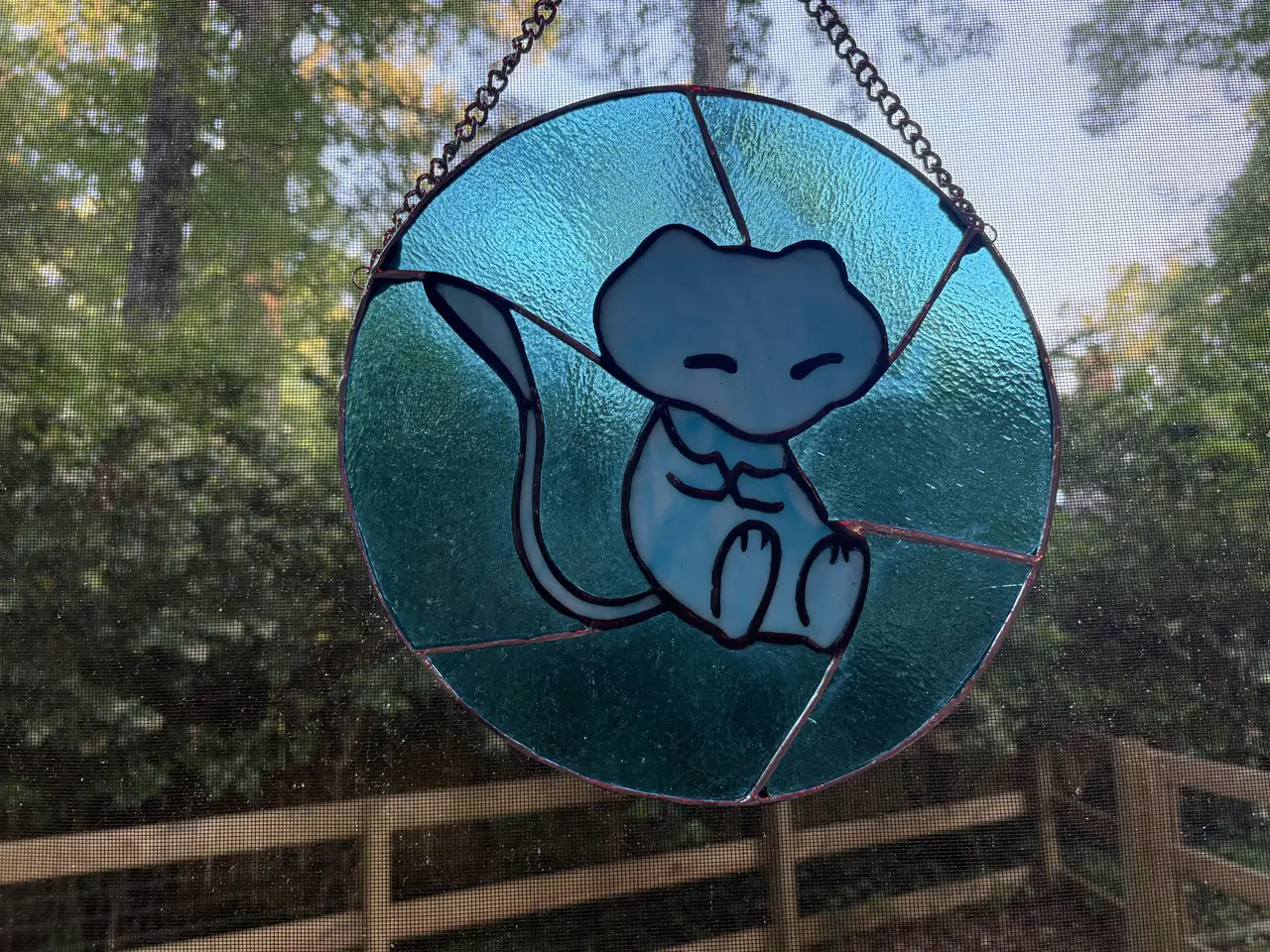
Someone on r/PokemonTCG just committed the ultimate hype sin: they gave up on pulling the card and made their own Bubble Mew out of stained glass. And honestly? It's more impressive than anything The Pokémon Company has printed in the last three sets.
Let's set the scene. The Pokémon TCG market in 2026 is a hellscape. You've got scalpers running bots that snipe ETBs before they even hit store shelves. You've got TikTok breakers cracking $600 booster boxes live while thousands of viewers rage-donate for a chance at a $2,500 Illustration Rare. Target limits purchases to two items per person and still sells out in 11 minutes. GameStop employees hide product in the back. Your local card shop has a waiting list longer than aPS6 pre-order queue.
Into this dystopia steps an anonymous Redditor with copper foil, a soldering iron, and approximately zero patience for TPCi's artificial scarcity games. The result? A stained glass Mew that catches light like a Prism holo ever could. No pack odds. No $45 UPC code tax. No awkward interaction with a 47-year-old scalper named Chad at a Walmart at 6 AM.
The post blew up because it struck a nerve. The Pokémon TCG community is exhausted. They're spending $30 on a pack of Prismatic Evolutions with a pull rate that makes gacha games look generous. Illustration Rares are sitting at 1-in-300+ packs for the chase cards. Do the math: that's $9,000 in packs to maybe pull the Mew you want, assuming Chad's bot didn't already claim the entire print run.
And here's where the hype-cycle collapses under its own weight.
The Pokémon Company International reported $2.8 billion in TCG revenue for fiscal 2025 — up 40% from 2023. They're printing money. Literally. Cards featuring the same artwork in slightly different foil patterns across six different product SKUs. "Limited edition" tin promos that turn out to be not limited at all. The situation mirrors everything wrong with hype culture in 2026: artificial scarcity, manufactured FOMO, and a product experience designed to exploit completionist anxiety rather than deliver joy.
Sound familiar? It should. This is the same playbook Pop Mart uses with Labubu blind boxes ($25 for a 3-inch vinyl figure you'll get in a flavor you don't want). It's the same energy as Stanley cup restocks that crash websites. It's sneaker drop culture metastasized into everything. Pokémon cards aren't a game anymore — they're a speculative asset class traded by the same finance bros who memed GameStop to $480.
The stained glass Mew is the antidote because it's analog creation in an age of algorithmic hype. No AI was used. No drop was scheduled. No influencer was paid to promote it. Someone just got mad at the market and built something beautiful with their hands.
This is the vibe shift. We're seeing it everywhere in 2026. People are exhausted by AI-generated everything, by algorithmically optimized scarcity, by engagement metrics disguised as products. They're returning to craft. To physical media. To things that take time and skill and can't be mass-produced by a factory in Shenzhen or a server farm in Oregon.
The comments on the Reddit post tell the full story. "This is worth more than any card they could print," wrote one user with 4.2K upvotes. "TPC wishes they had this kind of creativity," said another. Someone asked if the creator takes commissions. The stained glass Mew — a one-of-one, physically impossible to mass-produce — became more valuable to the community than the chase card it was based on. That's not just a feel-good story. That's a market signal.
Because here's the dirty secret of the Pokémon TCG hype economy: the cards aren't rare. TPCi can and does print millions of them. The "rarity" is entirely manufactured through distribution chokepoints and product dilution. They put one chase card in every 300 packs not because it costs more to print, but because it keeps you buying. It's the same reason crypto exchanges list tokens with "deflationary burn mechanisms" — artificial scarcity designed to trigger your ape brain into panic accumulation.
The stained glass Mew is actually rare. There is exactly one. The creator can't reroll it. Can't duplicate it. Can't drop a "reprint" that tanks its emotional value. It's a middle finger to the entire manufactured scarcity industrial complex, and it's gorgeous.
We're heading toward a cultural moment where the DIY/handmade version of a hype item becomes more prestigious than the "authentic" product. It happened with fashion (patched Levi's > raw denim). It happened with music (vinyl > streaming). It happened with AI (handwritten code > prompt engineering). Now it's happening with collectibles. When the official product is just ink on cardboard churned out by the million, the handcrafted alternative becomes the true luxury.
So here's to the stained glass Mew. To the creators who opt out of the queue entirely. To the analog resistance. May your solder joints be clean and your pull rates be irrelevant.